
- Art
Dots and Loops: Jen Chen-su Huang, Rita Maas, and Audra Wolowiec
In the post-war era of contemporary art, the musical score began to take on non-traditional roles in visual art, dance, sound art, poetry, and more. Conceptual and performance artists especially started to experiment with the formal structure of a musical score as a way of creating works that were more fluid and shifting, emphasizing process, interpretation, and iteration over a final, static product.
Dots and Loops brings together the work of multidisciplinary artists, Jen Chen-su Huang, Rita Maas, and Audra Wolowiec, who take up the musical score as a visual and conceptual framework to investigate questions around language, legibility, and perspective. Working site-specifically, the artists in Dots and Loops engage with themes relating to the natural world, presentness, and interpretation. They simultaneously impart the aural experience of being in a particular environment, while also exploring the ways in which that experience might be different for each person and how meaning constantly dissolves and reappears, taking on new, ever-changing forms depending on context and point of view. Through score, the artists interpret and relay sound through images, calling attention to those perspectives that often go unnoticed, opening up alternate ways of reading and listening.
Take, for example, the site-responsive drawings by Rita Maas from her series Call and Response. Working through silence, chance, and meditation, these drawings result from a deep-listening practice Maas started after a period of hearing loss that led to her heightened awareness of everyday sounds. Sitting in gardens, Maas attentively listens to the ambient birdsong while documenting what she hears from each ear with the corresponding hand. The result is a page of unmediated mark-making where auditory experience is relayed through pressure, shape, and location of the lines. All the drawings included in Dots and Loops were created at Wave Hill, and they serve as ephemera, documentation, or even archival materials—an attempt to convey an instantaneous moment of convergence between sound, image and embodied experience.
Referencing two films called Dots and Loops by the experimental animator Norman Mclaren, the title of this exhibition also implies an interconnection between the aural and the visual. In these films, Mclaren created a form of synthetic sound by drawing directly onto the soundtrack of the analog filmstrip. The relationship between sound and image production in both Mclaren’s films and the works presented in this exhibition is circular, looping, and symbiotic. As Maas’s hand moves to draw in the same moment she hears the birdsong, the scratching of her pencil on the paper makes its own noise, adding to the natural soundscape.
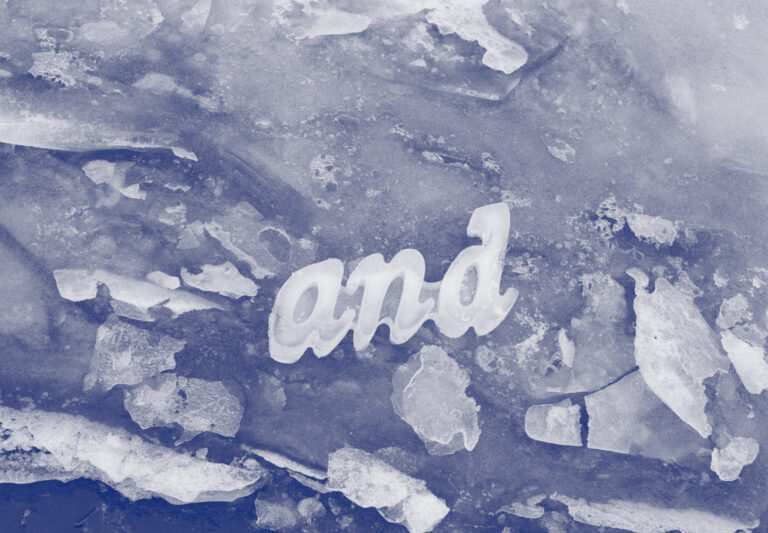
Audra Wolowiec’s project (waves) compares language to water due to its aqueous, ungraspable nature. This series started as a performance piece that took place aboard a passenger boat crossing the Hudson River. In this performance, an ensemble vocally performed an abstract sound score composed from interstitial chapters of Virginia Woolf’s 1931 novel The Waves that focus on describing the coast rather than furthering narrative. Distilling the text to its formal structure and connective joints, only the prepositions and conjunctions from these textual interludes are used in Wolowiec’s score, celebrating the disfluency of language and the multiplicity of interpretation. The artist then cast certain words from this score in ice, and performers released the ice sculptures into the Hudson where they melted, further merging language and water. Dots and Loops presents new works from this series, including photos, printed scores, and concrete sculptures. Distilling the text to its formal structure and connective joints, only the prepositions and conjunctions from these interstitial chapters are used in Wolowiec’s score, inviting a celebration of the disfluency of language and the multiplicity of interpretation. Here, space and site are expressed through breath and rhythm. Wolowiec’s work takes on a meditative quality, asking audiences to be present and embodied in our relationships to silence, sound, and water.
Similarly, the textiles of Jen Chen-su Huang reimagine Colonial American weaving patterns and other gridded forms as musical notations that she can play on her keyboard. In one artwork, she even transforms an old photograph depicting Wave Hill’s conservatory in a state of disrepair before it was rebuilt in 1969. In the image, the dilapidated windows of the conservatory form a grid that, for Huang, becomes a musical score. She then reinterprets those sounds back into the visual language of notes, patterns, and weavings. Through this practice, Huang unfurls the slippery nature of language, pointing to the generative possibility that emerges from illegibility. Like in Wolowiec’s work, perspective, possibility, and process are emphasized over meaning-making.
Public Program: October 25, 2026: Meet the Artists: Jen Chen-su Huang, Rita Maas, and Audra Wolowiec
-
Jen Chen-su Huang 黃謙恕
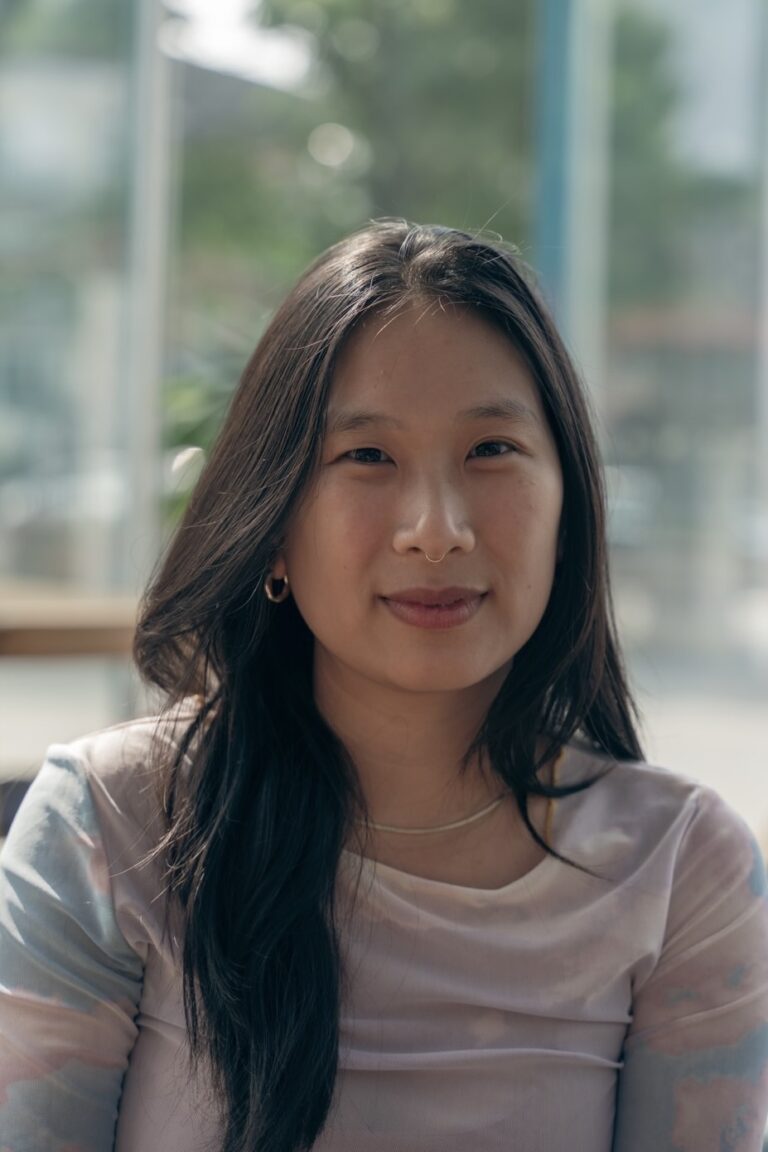
Jen Chen-su Huang 黃謙恕
Jen Chen-su Huang 黃謙恕 is an artist and writer whose work concerns memory, touch, and materiality. Her research has been supported by the Fulbright Foundation and published by Yale University Press. She is currently a PhD candidate in Performance Studies at New York University and teaches in the textiles department at Parsons School of Design. Huang earned an MFA in fiber and material studies from the School of the Art Institute of Chicago and a BA from the University of California, Berkeley. Photo: courtesy of the artist.
-
Rita Maas
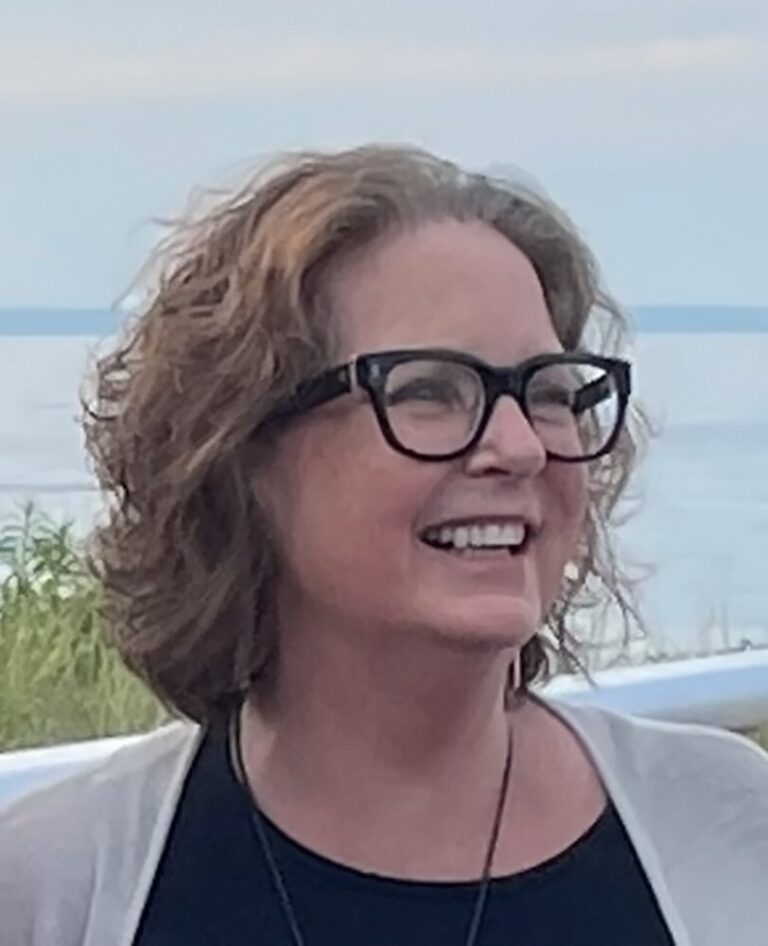
Rita Maas
Rita Maas is a visual artist living and working in the Hudson Valley, NY. She works in photography, drawing, and printmaking to create conceptually driven imagery. Working with predetermined systems to explore how information is received, filtered, and retained, Maas embraces elements of chance and disorder. Maas is a 2023 NYSCA/NYFA Artist Fellow and has participated in residencies at ChaNorth in Pine Plains, NY, as well as the Virginia Center for the Creative Arts and Hollins University both in Virginia. Maas’s work has been widely exhibited in venues such as the Museum of Fine Arts Houston, The Katonah Museum of Art, Kentler International Drawing Space, KinoSaito Art Center, and The Print Center in Philadelphia, PA. Maas’s work is held in the collections of the Museum of Fine Arts, Houston; the Center for Creative Photography, Tucson; the Griffin Museum of Photography; the Eleanor D. Wilson Museum; and Archive 92, among others. Maas earned a BFA in photography from the School of Visual Arts and an MFA in visual arts at Lesley University College of Art and Design. Photo: courtesy of the artist.
-
Audra Wolowiec
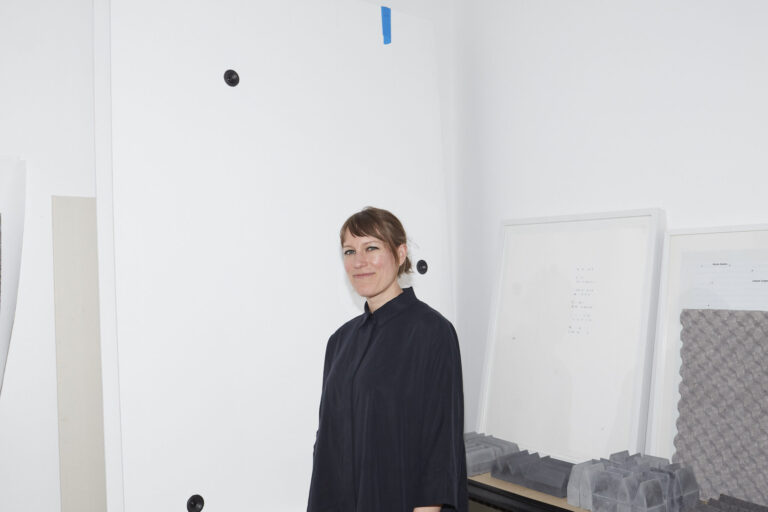
Audra Wolowiec
Audra Wolowiec is an interdisciplinary artist based in New York who works in installation, print, and performance, with an emphasis on sound and the material qualities of language. Her work with sound extends from the embodied experience of her own disfluent speech and draws from the traditions of musical notation and visual poetry. Wolowiec’s work has been shown internationally and in the United States at MASS MoCA, North Adams, MA; Hessel Museum of Art, Bard College, Annondale-on-Hudson, NY; and Columbia University, Print Center New York, and Art in General, all in New York, NY. Readings and events have taken place at The Poetry Project and Microscope Gallery in New York, and the Gray Center at the University of Chicago. Wolowiec teaches at Parsons School of Design and directs the publishing platform Gravel Projects. Photo: courtesy of the artist.
Also on view



Know Before You Go
Our tips help you navigate our grounds and protect our living collection—and we have guidelines in place to keep us all safe and well.